

Know Your Triggers: A Cold Sore Trigger-Tracking Guide.

If you have ever felt that familiar tingle on your lip and thought "not again," you are far from alone. Cold sores have a talent for showing up at the least convenient moments, often right before a big presentation, a long-awaited vacation, or a family photo you actually wanted to be in. What many people do not realize is that these outbreaks are rarely random. Almost every flare-up can be traced back to a specific cold sore trigger, and once you learn to recognize your own, you gain a real sense of control over something that can otherwise feel completely unpredictable.
This guide walks you through what a cold sore trigger really is, the most common ones to watch for, and a simple way to track your personal patterns so you can stay one step ahead.
What a Cold Sore Trigger Actually Is
Cold sores are caused by the herpes simplex virus, most often HSV-1, which is part of a large family of human herpesviruses. Once the virus enters your body, usually during childhood, it never fully leaves. Instead, it settles into the nerve cells near your spine and stays dormant, sometimes for months or even years at a stretch.
A cold sore trigger is anything that rouses the virus out of that resting state and sends it traveling back up to the surface of your skin, where it forms a visible sore. This is an important shift in thinking. An outbreak is not bad luck and it is not something you did wrong. It is your body responding to a specific set of conditions. And conditions, unlike luck, can be observed, anticipated, and often avoided.
The Most Common Cold Sore Triggers
While everyone is a little different, most outbreaks trace back to a handful of usual suspects. As you read through these, take note of any that feel familiar. That instinct is the beginning of your tracking work.
Stress. Emotional and physical stress is one of the most commonly reported cold sore triggers. When you are under pressure, your body releases hormones that can quietly suppress your immune system, giving the dormant virus an opening. This is why so many people notice an outbreak during exam week, a stressful project, or right after a major life event.
Sunlight and UV exposure. Ultraviolet light is a well-known cold sore trigger, which is why outbreaks often follow a beach day, a ski trip, or an afternoon spent outdoors without lip protection. UV rays can irritate the delicate skin of the lips and reactivate the virus, so a lip balm with SPF is one of the simplest preventive habits you can build.
Illness and fever. There is a reason cold sores are sometimes called fever blisters. When you are fighting a cold, the flu, or any infection, your immune system is busy elsewhere, and the virus can take advantage. Many people find that a cold sore trigger and a run-down feeling arrive hand in hand.
Hormonal changes. Shifts in hormone levels, particularly around menstruation, can act as a reliable cold sore trigger for some people. If your outbreaks seem to follow a monthly rhythm, hormones may be a factor worth logging.
Lip trauma and dryness. Sometimes the trigger is physical. Chapped lips, a dental procedure, sunburned skin, or even aggressive lip exfoliation can be enough to prompt an outbreak. Keeping your lips moisturized and treating them gently goes a long way.
Fatigue. Poor sleep and general exhaustion weaken your defenses in much the same way stress does. A string of late nights can be its own quiet cold sore trigger.
Diet and lifestyle. For a smaller group of people, certain foods or a dip in overall nutrition seem to play a role. This one varies widely from person to person, which is exactly why individual tracking is so useful.
Why Tracking Your Triggers Is Worth It
Reading a list of common cold sore triggers is helpful, but your body does not follow a generic list. It follows its own patterns. One person might sail through a stressful month with no issues yet break out after a single sunny afternoon. Another might be completely unbothered by the sun but reactive to hormonal changes. The only way to learn your particular pattern is to pay attention over time.
When you know your personal cold sore trigger, two good things happen. First, you can often avoid outbreaks altogether by managing that trigger before it takes hold, whether that means wearing SPF on the slopes or protecting your sleep during a stressful stretch. Second, when you cannot avoid it, you can watch for the earliest signs and respond right away, when action matters most.
How to Track Your Cold Sore Triggers
You do not need anything fancy. A note on your phone or a small notebook works perfectly. The goal is to build a simple record you can look back on.
Start by logging every outbreak as it happens. Write down the date and the moment you first noticed anything, even a faint tingle. Then look back over the previous three to five days and jot down what was going on. Were you unusually stressed or short on sleep? Had you spent time in strong sun? Were you getting sick, or just getting over something? Where were you in your cycle, if that applies? Did anything unusual happen to your lips, like windburn or a dental visit?
Do this for a few outbreaks and something remarkable tends to appear. The same cold sore trigger, or the same small cluster of triggers, keeps showing up. Once you can name it, you can plan around it. If sun is your trigger, protection becomes non-negotiable before outdoor plans. If stress is your trigger, you learn to be especially watchful during demanding weeks.
What to Do When a Trigger Strikes
Even the most careful tracking will not prevent every outbreak, and that is completely normal. The real advantage of knowing your cold sore trigger is timing. When you have been exposed to something you know sets you off, you can stay alert for that first tingle or itch, the stage before a sore fully forms.
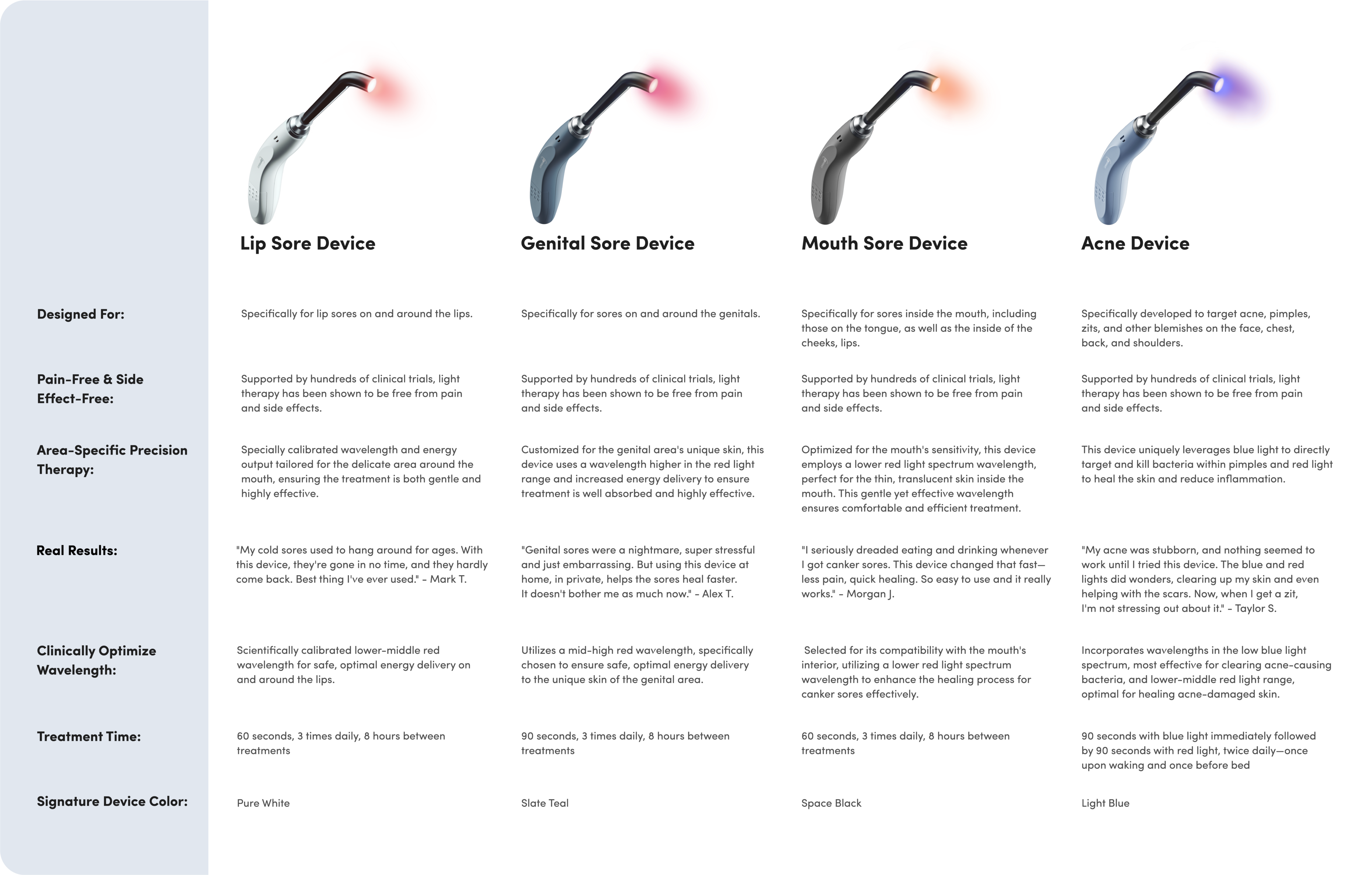
That early window is precious. Acting the moment you feel something coming on gives you the best possible shot at a shorter, milder experience. This is exactly when it helps to respond quickly rather than wait and hope it passes. Having a calm, drug-free plan ready means you are not scrambling when a trigger catches you off guard, and being prepared to act early turns that anxious first-tingle moment into something you know how to handle.
If an outbreak does progress, do not lose heart. There are gentle, effective ways to care for your skin through the full healing cycle. Our guide on how to heal a cold sore and stop them fast walks you through what to expect and how to support your lips from the first sign through recovery.
The Takeaway
A cold sore trigger can feel like an enemy, but it is really just information. Every outbreak your body has ever had was trying to tell you something about what sets it off. When you slow down and track those patterns, you trade the frustration of the unpredictable for the confidence of knowing what to watch for and when to act. That knowledge, more than anything, is what puts you back in charge of your own skin.